IELTS 2026: test dates, format, how to book and free practice tests
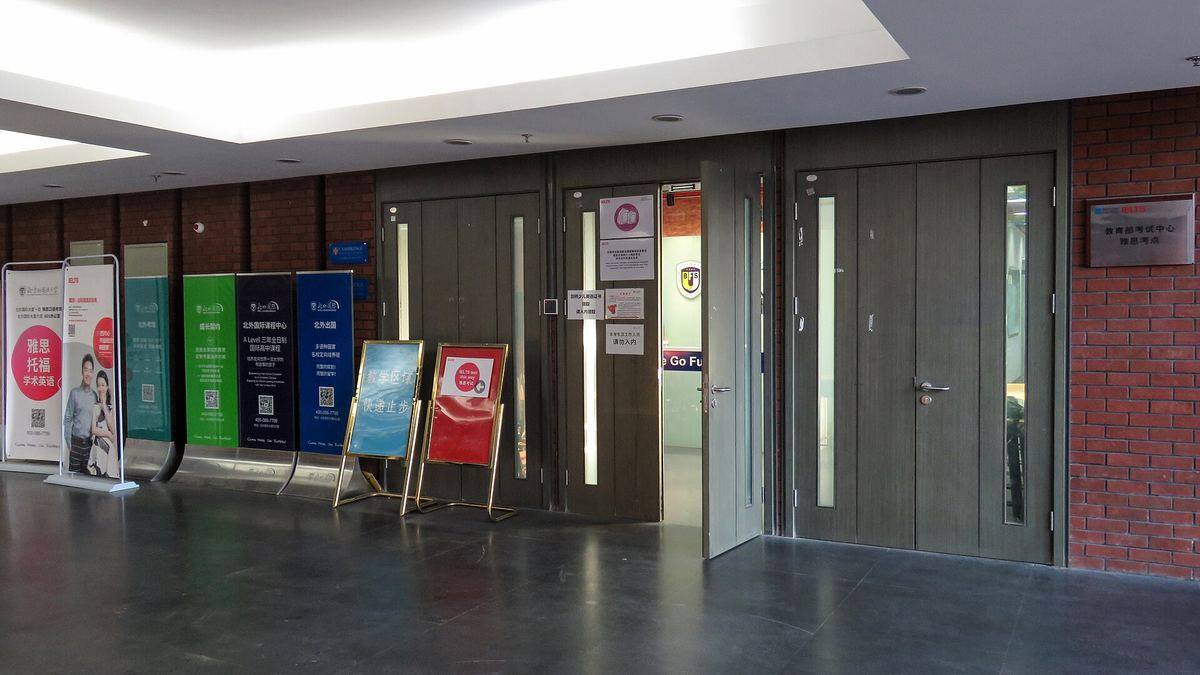
IELTS is the English test run jointly by the British Council, IDP IELTS and Cambridge University Press & Assessment, used for university admission, professional registration, work and migration. There is no single IELTS exam date: test centres run sessions through the year and you book the date that suits you. This guide explains how to find a date and book it, the IELTS exam pattern, what each skill tests, and a six-week plan with mock tests.
IELTS at a glance
| Conducting body | British Council, IDP IELTS and Cambridge University Press & Assessment |
| What it is for | Academic: university study and professional registration. General Training: work, training and migration |
| Mode | On paper or on a computer at a test centre; Speaking face to face with an examiner |
| Questions | Listening 40, Reading 40, Writing 2 tasks, Speaking 3 parts |
| Time | About 2 hours 45 minutes |
| Marking | A band from 0 to 9, in half bands, for each skill and overall |
| Language | English |
| How often | Many dates through the year at each centre |
| Official website | ielts.org |
Test dates and booking
IELTS does not have one national exam date. Each test centre publishes its own sessions, and you choose one when you book. To see real dates, use the official IELTS test centre finder, which also lets you book an online test in countries where that is offered.
Results timing, as stated on the official IELTS results page (checked 20 October 2026):
| How you take it | When results come |
|---|---|
| IELTS on computer | Usually within 1 to 2 days |
| IELTS on paper | Within 13 days (7 days in India) |
So if a university or visa deadline is close, the computer test leaves more room. Work backwards from your deadline: allow time for the result, for sending it, and for a possible second attempt.
How to book IELTS
- Check which form you need, Academic or General Training, and the band your university, employer or immigration programme asks for, on their own website. Our article on IELTS Academic vs General Training explains the difference.
- If the result is for a UK visa, check whether you need IELTS for UKVI, the IELTS form that counts as a Secure English Language Test.
- Go to the IELTS test centre finder, choose your country and city, and pick paper or computer.
- Choose a date and book with the centre, paying the fee shown there.
- Book your Speaking slot. Speaking can be on the same day as the other three skills, or up to a week before or after.
- Read the rules on cancellations, refunds and transfers before you pay.
Keep ready: the identity document you will use on the day. IELTS says to bring the same identification document you used when you booked; you cannot take the test with the wrong ID or without it.
IELTS exam pattern
Listening, Reading and Writing are taken in one sitting. Listening and Speaking are the same in both forms.
| Skill | Time | Questions | Academic | General Training |
|---|---|---|---|---|
| Listening | About 30 minutes | 40 in 4 parts | Same | Same |
| Reading | 60 minutes | 40 | 3 long texts from books, journals and newspapers | 3 sections of everyday and workplace texts |
| Writing | 60 minutes | 2 tasks | Task 1 describes a graph, table, chart, diagram or process | Task 1 is a letter |
| Speaking | 11 to 14 minutes | 3 parts | Same | Same |
Writing Task 2 is an essay in both forms and counts for more than Task 1. Each recording in Listening is heard once.
Scoring. Each skill gets a band from 0 to 9 in half bands. The overall band is the average of the four, rounded to the nearest half band: an average ending in .25 goes up to the next half band and one ending in .75 goes up to the next whole band. As a rough guide, IELTS gives about 30 out of 40 for band 7 in Listening and in Academic Reading, but General Training Reading needs about 35 for band 7. There is no pass or fail.
IELTS syllabus
IELTS has no list of topics to learn; it tests skills. What each part asks you to do:
- Listening: multiple choice, matching, labelling a plan, map or diagram, completing forms, notes, tables and summaries, and short answers.
- Reading: multiple choice, True / False / Not Given, Yes / No / Not Given, matching headings and information, sentence and summary completion.
- Writing: a 150-word Task 1 and a 250-word Task 2 essay, marked on task achievement or response, coherence and cohesion, lexical resource, and grammatical range and accuracy.
- Speaking: questions on familiar topics, a short talk from a topic card after a minute to prepare, and a discussion. Marked on fluency and coherence, lexical resource, grammar, and pronunciation.
The full breakdown is on our IELTS syllabus page.
A six-week plan before your test date
| Week | What to do |
|---|---|
| 1 | Take one full IELTS mock test under timed conditions. Work out your band for each skill and note the weakest. |
| 2 | Reading: one timed passage a day. Keep a list of the question types you get wrong (often True / False / Not Given). |
| 3 | Writing: two Task 2 essays a week in 40 minutes, one Task 1 in 20 minutes. Check each against the four criteria. |
| 4 | Listening: one full test every two days; practise spelling of numbers, dates and names. Speaking: record a Part 2 talk daily. |
| 5 | Second full mock. Compare each skill with week 1 and spend the week on the one that moved least. |
| 6 | One last full mock early in the week, then light practice. Check your ID, centre address and Speaking time. |
After every mock, follow the steps in how to analyse a mock test: why each mark was lost matters more than the score.
Useful links
- Book IELTS: find a test centre (ielts.org)
- IELTS Academic test format (ielts.org)
- IELTS scoring in detail (ielts.org)
- Free IELTS mock tests and band calculator
- IELTS syllabus
- IELTS test dates
- IELTS Academic vs General Training
- How to use mock tests
Frequently asked questions
When is the next IELTS exam date?
There is no single date. Each test centre runs its own sessions through the year, and you pick one on the IELTS test centre finder. Computer sessions usually give results within 1 to 2 days.
Is there negative marking in IELTS?
Listening and Reading give one mark per question out of 40, and the band comes from the number you get right. A blank and a wrong answer both score nothing, so always write an answer.
What is the IELTS pass mark?
There is no pass mark. Each university, employer or government sets the band it needs, often with a minimum for every skill as well as overall.
Which IELTS should I book for Canada or the UK?
For Canadian economic immigration, IRCC accepts General Training, not Academic. For most UK visas that need an English test, book IELTS for UKVI.
How is the overall IELTS band calculated?
It is the average of the four skill bands, rounded to the nearest half band. For example, 7, 6.5, 6 and 6.5 average 6.5, so the overall band is 6.5.
Can I take an IELTS mock test for free?
Yes. Mockrooms has free IELTS practice tests with timed sections and a band calculator. They are our own practice papers, not official IELTS tests.